Diary of a Madman
How journaling can help social media addiction, so you can tell the algorithm to go to hell.

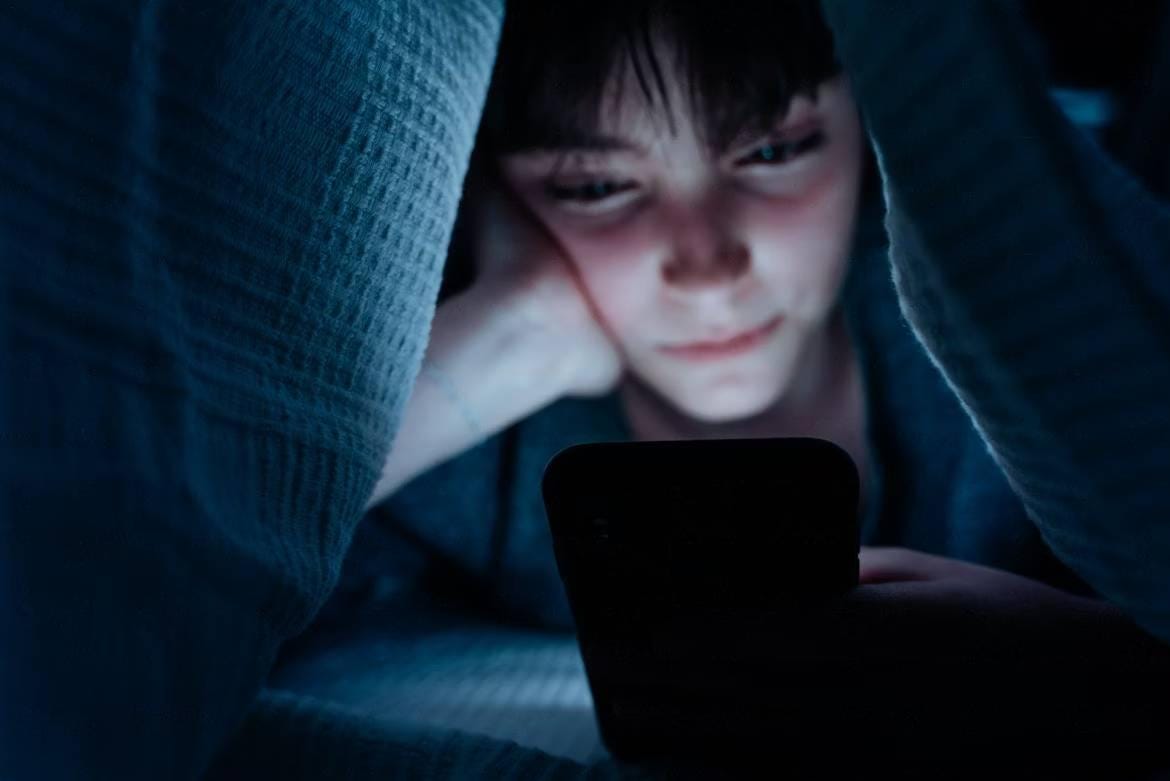
The morning alarm goes off. You wake up, reach for your phone to turn it off, and your thumb automatically finds Facebook, Instagram, or TikTok, and the never-ending scroll begins.
Oh, look, there’s a political post from a second cousin once removed. A recipe you must try. Websites that should be illegal. Trump has dementia, or cankles, or a stroke. A co-worker’s kid is going to college.
You comment on the Facebook post, and then a bunch of other people, some you know, start commenting on your comment, and now you’ve spent a couple of hours sharing and rage quoting, and scrolling, and you haven’t really gotten out of bed yet.
If this sounds like you, that’s a real problem. This addiction may not start the first thing in the morning. It could be a needed hit while in line at Starbucks, as you mindlessly eat lunch, or right before bed.
Constantly being on social media, adding pictures and videos, or sharing events is so ubiquitous today that no one thinks twice.
But maybe you should.
With every post, comment, share, or like, we are telling stories. Social media was sold to the masses as a way to stay in touch with old and new friends. We can easily share our feelings and hot takes on anything and everything with just a few taps on our phones.
But should we?
When I was growing up, without social media and mobile phones, it was not easy to communicate. I wrote letters and mailed them to friends who lived outside my hometown. I sometimes made phone calls, but there were long-distance charges I didn’t want to pay for. If we had a secret, we would share it face-to-face.
There was an expectation of not being able to reach someone. I could have been across town on my bike, and my parents had no idea where I was or who I was with. I could have been cruising with my friends on a country road with a 10 pm curfew on a Friday night and nothing else to stop me.
My parents didn’t “helicopter” me. They simply trusted me not to do anything stupid (or at least not too stupid). The thought of “sharing” what we were doing with everyone never even crossed our minds.
Today, the opposite is true. It’s weird not to share our experiences, no matter how mundane, with the world. It’s weird to keep things private.
It shouldn’t be.
I was undoubtedly guilty of oversharing on Facebook and Twitter. It was fun, especially in the early days, to learn what high school and college friends were up to. It was fun to reconnect. And then it was fun to tell the world how great things were going, how terrible things were, or here’s what I ate for lunch.
Social media became the default. Profoundly dark or bubbly upbeat got the same level of engagement. We shared, and then we overshared, and sometimes we paid the price. Relationships went sideways because you liked a picture of an ex-boyfriend. Jobs were lost because of an ill-informed tweet or post.
You read stories of off-the-cuff remarks ultimately getting people into hot water. And still we wanted more to see, to read, to be “outraged” over, to get “angry” at. It was and is addictive.
Social media made individuals the stars of their own show. Constant selfies. Constant updates on relationships, food choices, experiences like concerts and sporting events. They organized their lives to be content. The feedback, good or bad, was needed, longed for, and expected. The dopamine hits had to keep coming. Their individual value is judged by their social media following, their hot takes on the latest news, and how they look, talk, and present themselves.
In my opinion, this relentless hamster wheel is detrimental, unhealthy, and a waste of time.
So, what’s the solution? Surprisingly, it’s keeping a journal or diary.
Keeping a journal is nothing new. It also doesn’t matter if it’s pen and paper or digital. Keeping a private diary is almost quaint in this day and age of oversharing. It’s also a quiet way of saying, “to hell with the algorithm.”
What to do is simple. Treat your journal as a private social media feed and you’re the only follower. Only you can see your posts. You write all the things you’d usually write on a social media feed into your journal. Thoughts and feelings. Worries and successes. Any experience you want to hold on to or reflect upon. It’s all the benefits of sharing or “getting it out of your system,” without worrying about how it’s perceived. There is no performance, just writing.
I built mine in Day One. Most entries are a few paragraphs. I usually have a theme, and I add a photo. I added a section to mark the weather, what I’m listening to at the time with a link, what I’m reading, a quote, and more. I treat each entry like private tweets or microblog posts, the kind I’d never actually post. It’s 280+ characters of whatever the hell I’m thinking.
And something magical happens. All the thoughts and feelings that have been bubbling up go right in Day One. I can be pissed about my co-workers and not think twice about posting. I can write in the first person or third person, and no one will know. Or care.
It’s freedom.
There is no public perception of anything because there’s no public. I get to reflect on a biting comment my wife said to me, write it all out in a way I can review, and decide whether or not she was full of shit (she never is). I can grow and try to learn from my mistakes, and no one else gets to chime in.
There’s no instant gratification of a social media post with hundreds of likes or a long comment thread. And that makes all the difference. Treating Day One like a private social media feed can seem lonely at first. However, that audience of one is also its strength.
By all means, keep your social media and post whatever makes you feel happy. I’ve decided I don’t need the aggravation. I’ve decided to write in Day One instead of Bluesky, Threads, Twitter, or whatever the hell is the flavor of the month now.
I’ve found that I no longer need the validation of strangers or near strangers. I hope you all like what I write here, but you don’t get to see all of me. My journal gets it. It’s immensely satisfying to write in Day One and then refine my thoughts through the writing process.
Reading it back, it’s the diary of a madman, and I like it.
Be seeing you.

you have my attention. but i’d like it back now, please
This was a slight inspiration for what I wrote above. It’s more about attention, but it sparked my thoughts on social media and my own attention.
A Few Day-After-the-Election Thoughts
Josh Marshall with the most important thought: “A number of morning-after reviews I’ve seen say that the Democrats had had a great night but still hadn’t addressed their “civil war” — the battle over whether to run “moderates” or “progressives.” Is it a future of Spanbergers or Mamdanis? That doesn’t seem quite right to me. They have a pretty good model: find candidates suited to their constituencies and focus on cost of living issues and opposition to Donald Trump’s autocracy. Full stop. It’s not more complicated than that. That’s your opposition message.” Yup.
The Sound of Time
Mike Vardy wrote a love letter to the vinyl album. It’s quite lovely.
Journey Announces Plan to Finally Go Separate Ways, With Farewell Tour Set to Begin in 2026
This has been a long time coming. As much as I love Journey, it’s time to put an end to the band. Of course, I fully expect Neal Schon to continue with his Journey Through Time show, which features former Journey keyboardist Gregg Rolie and current Journey drummer Deen Castronovo handling all the drumming, along with the Steve Perry-led vocals. Hey, they’re gonna be in Champaign in late June, just in time for my birthday!
Dick Cheney Departs The World He Made
I wish I cared more than I do, but I don’t. Well… bye.
The Big Smirk
I hadn’t thought about Trump’s ridiculous Gatsby-themed party from a few days ago like Paul Krugman. I was focused on the tone-deafness of it all, but he believes it’s way more along the lines of Adam Serwer’s article for The Atlantic titled “The cruelty is the point.” Trump revels in cruelty, as do his followers.
AI Is Remixing Everything We’ve Ever Made. Here’s What That Means.
This documentary examines the impact of generative AI tools, such as ChatGPT and Midjourney, on art and meaning. Kirby Ferguson (Everything is a Remix) examines the “Ghibli moment,” a viral controversy that highlights the creative potential and limitations of AI.
This McDonald’s Ad is Pure Genius
I greatly enjoy finding advertisements like this. The best ads seem to be those which focus on core values, like family and friends. Like this one, from Volvo last year. Just so good.
The Last Days Of Social Media
“The difference between human and synthetic content is becoming increasingly indistinguishable, and platforms seem unable, or uninterested, in trying to police it. Earlier this year, CEO Steve Huffman pledged to “keep Reddit human,” a tacit admission that floodwaters were already lapping at the last high ground. TikTok, meanwhile, swarms with AI narrators presenting concocted news reports and “what‑if” histories. A few creators do append labels disclaiming that their videos depict “no real events,” but many creators don’t bother, and many consumers don’t seem to care.”
“I am beautiful”
John DeVore writes essays I could never conceive of ever putting out into the world.